The Secrets of the Whale Sharks of Saleh Bay: Population, Range, and Economy
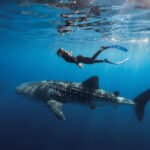
Whale sharks (Rhincodon typus) are not merely the largest fish in the world; they are architects of marine ecosystems that play a crucial role as indicator species for the health of tropical waters. As filter feeders, their presence indicates a healthy and productive food chain. However, globally, these spotted giants are on the brink of a worrying extinction. The International Union for Conservation of Nature (IUCN) has classified whale sharks as Endangered after their global population declined by more than 50% due to threats from hunting, habitat degradation, and accidental capture in fishing nets (bycatch). Amid this bleak global conservation landscape, the waters of Saleh Bay in West Nusa Tenggara (NTB) Province, Indonesia, have emerged as a new oasis of hope. Through a scientific report titled “Preliminary Study of Whale Sharks in Saleh Bay,” released by Conservation Indonesia in collaboration with the Ministry of Marine Affairs and Fisheries (KKP) and the NTB Provincial Marine and Fisheries Agency, this semi-enclosed bay has been officially identified as one of the most important and dynamic whale shark aggregation sites in the world.
The following is a comprehensive analysis and in-depth review of all scientific aspects, research methodology, demographic structure, behavioral patterns, and the economic value of whale sharks in Saleh Bay based on data collected from 2017 to 2022.
The successful completion of this study is the result of a multi-year research commitment (2017–2022) that employed a modern, internationally recognized applied science approach. The researchers did not rely solely on random visual observations, but instead utilized the three main pillars of scientific methodology:
Over the five-year monitoring period, the research team successfully identified and recorded 108 unique whale sharks in Saleh Bay. Upon analyzing the demographic structure of these 108 individuals, the team discovered population characteristics that are highly specific and biologically intriguing:
One of the most valuable findings of this study by Konservasi Indonesia is that whale sharks in Saleh Bay exhibit a year-round residency pattern. This phenomenon differs drastically from other aggregation sites around the world (such as Ningaloo Reef in Australia or Donsol in the Philippines), where whale sharks only visit seasonally for a few months each year.
While 108 unique individuals were physically photographed, marine science recognizes that not all whale sharks surface simultaneously. Using Mark-Recapture statistical modeling, researchers estimate the actual population dynamically utilizing Saleh Bay ranges between 120 to over 150 individuals. This solidifies Saleh Bay as the second-largest whale shark aggregation site in Indonesia, closely following Cenderawasih Bay National Park in Papua.
Vertical Diving: Within the shallow bay, whale sharks spend 70% of their time in the upper 20 meters to forage. However, when venturing into the open sea, these juveniles perform extreme deep dives exceeding 1,000 meters likely searching for meso-plankton and regulating their body temperature after basking in the sun.
Horizontal Migration: While their core home range centers around Labuhan Jambu and Tarano, satellite data shows they periodically leave the bay. They travel hundreds of kilometers across the Flores Sea, Lombok Strait, Bali Sea, and southern Makassar Strait before consistently returning to Saleh Bay, proving these regional waters form a single, vital ecological corridor.
The year-round presence of whale sharks has proven that they are far more valuable alive than hunted. This ecotourism model operates via self-sustained conservation programs in close partnership with traditional fishermen.
Economic Surplus: This specialized tourism generates an average direct turnover of IDR 1.2 billion per year, benefiting locals through boat rentals, homestays, guiding fees, and local food stalls.
Future Projections: Optimizing a single-entry ticketing system could push local revenue to IDR 1.5 billion per year. These funds are recommended to finance community-based marine surveillance (Pokwasmas) and compensate fishermen for nets damaged by the sharks.
Uncover the full financial and conservation impact report here
Currently, only 23% (5,737 hectares) of primary whale shark hotspots in Saleh Bay fall under official legal protection. The remaining 77% leaves the population highly vulnerable to cumulative threats:
Marine Traffic: High risk of collisions with boat propellers from fast tourist boats or commercial fishing vessels.
Overtourism: Uncontrolled visitor spikes lead to poor behavior, such as boats crowding the sharks, camera flashes blinding their sensitive eyes, and engine noise causing acute stress.
Plastic Pollution: As massive filter feeders, whale sharks face a fatal risk of ingesting micro and macro plastics flowing from local river mouths.
To mitigate these threats, Konservasi Indonesia recommends accelerating the declaration of a 69,550-hectare Whale Shark Conservation Area in Saleh Bay. This follows the ecological principle of an umbrella species. By strictly protecting the whale shark’s expansive migratory paths, all other marine biodiversity thriving beneath them manta rays, dolphins, sea turtles, dugongs, and coral reefs will automatically be shielded from destructive exploitation. The long-term survival of this paradise hinges on strict adherence to the whale shark code of conduct (maintaining 3 meters from the body, 4 meters from the tail, and strictly forbidding touching). By ensuring these sustainable standards, you actively protect Indonesia’s marine treasures. To experience these natural wonders responsibly, consider planning your journey through an eco-conscious 17Tour Agence that is deeply committed to preserving the natural heritage of the archipelago.
4.7 / 5
Basé sur+ de 100 commentaires
Posted onTrustindex verifies that the original source of the review is Google. 我們參加了gilli island 私人浮潛活動,多謝導遊Alexander 和他的同伴帶給我們美好的旅程! 沿途帶我們到不同潛點找海龜,不停幫我們拍照,還帶我們看了小海龜保育中心!Posted onTrustindex verifies that the original source of the review is Google. Great trip! We saw whale sharks, humpback whale, dolphins and many other creatures along the way. The vibe on the ship was amazing. Samsul and the rest of the crew were very friendly and helpful with everything you need!Posted onTrustindex verifies that the original source of the review is Google. I had an unforgettable experience with the Golden Island Cruise! We caught beautiful sunrises and sunsets, snorkled with whale sharks and visited dreamy beaches. Ramli and the crew were very helpful and entertaining. Would definitely recommend this 4 day-trip!Posted onTrustindex verifies that the original source of the review is Google. The best I have ever experienced!!! i loved it!! From the food to the boat or the excursions, everything was great!Posted onTrustindex verifies that the original source of the review is Google. We did a private snorkeling tour with them and it was absolutely amazing. Nice boat and guide, good gear and great service when we asked to move the tour because of the weather. Thanks a lot!Posted onTrustindex verifies that the original source of the review is Google. Unforgettable experience, mostly because of the beautiful things we've seen and the super helpful and friendly staff. Ramli and the other great crew members really made a difference. Also the communication was good and so was the food actually, as they really tried to serve a variety of food. Small and easy things to make it to a 100/100 instead of a 98/100 would be to take more into account possible diet wishes/allergies and buy some new snorkling sets. They did the job mostly but are in need of replacement. Thanks so much Golden Island Cruise, it was a pleasure!Posted onTrustindex verifies that the original source of the review is Google. super agence. Très bon contact, la réservation s’est faite facilement, les organisateurs étaient très disponibles sur whatsapp pour répondre à nos questions. Excellente expérience sur le bateau. Tout était super, entre les activités proposées, les paysages à couper les souffles, les plages paradisiaques. Et surtout l’expérience sur le bateau, l’équipage était genial, très avenant pour partager de bons moments avec nous ! On a adoré et on recommande ++ Merci beaucoup à tout le monde 🫶🏻❤️Posted onTrustindex verifies that the original source of the review is Google. Very good
Offre Spéciale Seulement Pour Vous !
Visionnez Notre Vidéo sur YouTube
 English English
  Español
  Bahasa Indonesia
  Français
  Deutsch English English Español
Bahasa Indonesia
Français
Deutsch
Deutsch English English Español
Bahasa Indonesia
Français
Deutsch
Chat-Nous Sur