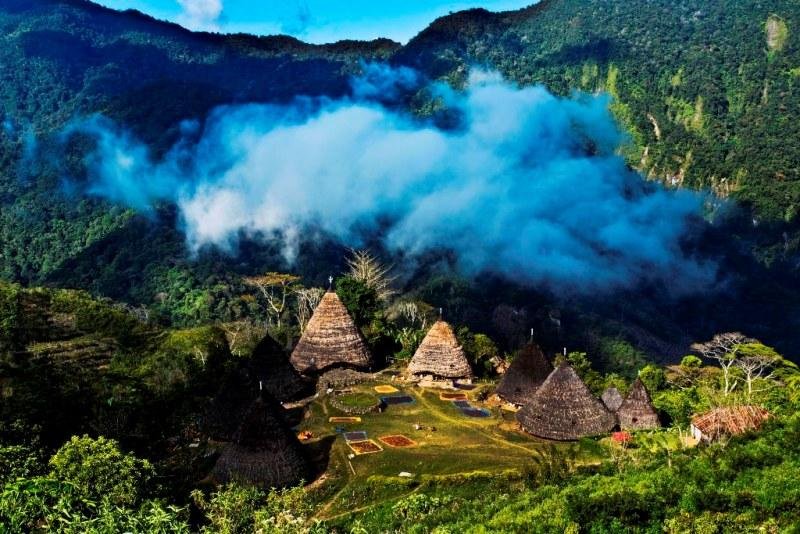
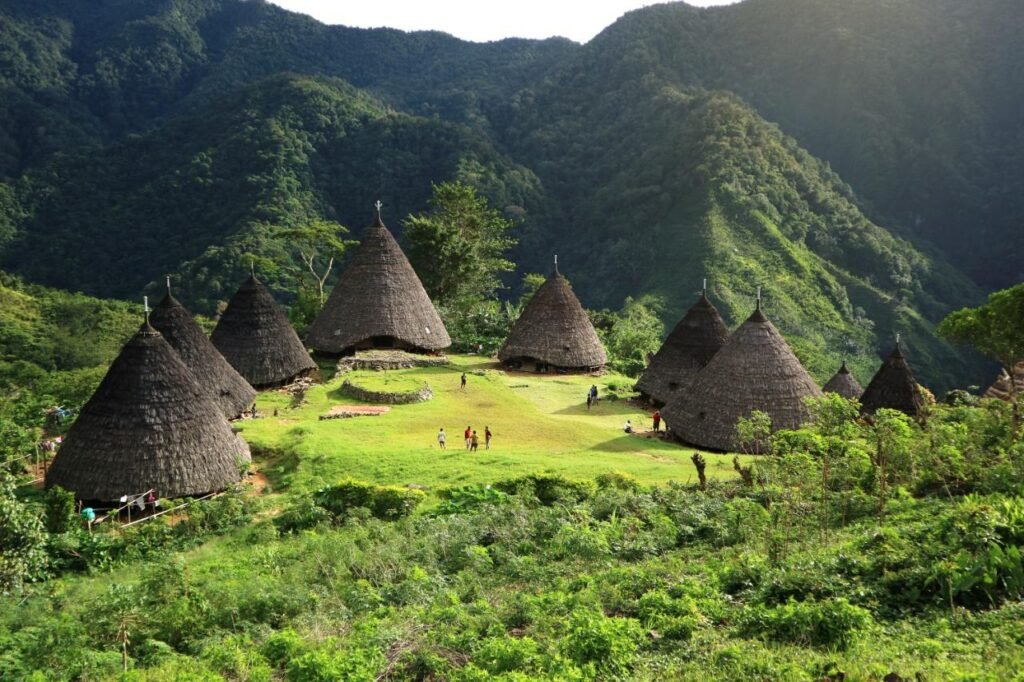
Nestled high within the misty mountains of West Manggarai on Flores Island, Wae Rebo is one of Indonesia’s most extraordinary cultural destinations and one of the country’s best-preserved traditional villages. Located approximately 1,200 meters above sea level, this remote mountain village is surrounded by lush rainforests, rolling hills, and breathtaking scenery. For travelers exploring Flores, 17 Tour Agency offers well-organized Wae Rebo tours with experienced local guides, making the journey safe, comfortable, and unforgettable.
More than just a tourist attraction, Wae Rebo is a living cultural village where the Manggarai people continue to preserve their traditional Mbaru Niang houses, ancestral customs, coffee farming, and weaving traditions. With no hotels, very limited mobile signal, and a peaceful mountain atmosphere, visiting Wae Rebo feels like stepping back in time.
Reaching Wae Rebo requires a scenic trek through tropical forests, making the journey just as memorable as the destination itself. Whether you’re passionate about culture, trekking, or photography, Wae Rebo offers one of the most authentic travel experiences in Flores.
Before becoming one of Indonesia’s most famous cultural destinations, Wae Rebo remained hidden deep within the mountains of Flores for centuries. Its remote location helped preserve the village’s unique traditions and way of life, making it one of the country’s most authentic indigenous communities. According to local oral history, the village was founded by Empo Maro, an ancestral figure believed to have migrated from Sumatra before eventually settling in the mountains of Flores. His descendants established Wae Rebo as a peaceful agricultural community where people lived in harmony with nature while preserving the customs, beliefs, and traditions passed down through generations. For hundreds of years, the village remained isolated from modern development because of its mountainous location. This natural isolation protected its traditional architecture, cultural identity, local language, and ancestral way of life, allowing these traditions to survive almost unchanged for centuries.
In the early 2000s, concerns grew over the deteriorating condition of the original Mbaru Niang houses. Through a collaborative restoration effort involving the local community, conservation experts, and cultural organizations, the iconic houses were carefully rebuilt using traditional construction techniques and locally sourced materials. This remarkable preservation project later earned international recognition. In 2012, Wae Rebo received the prestigious UNESCO Asia-Pacific Award for Cultural Heritage Conservation (Award of Excellence) in recognition of the community’s outstanding commitment to preserving its traditional architecture and indigenous cultural heritage. It is important to note that the village is not a UNESCO World Heritage Site, despite what many websites mistakenly claim. Instead, it received UNESCO’s highest heritage conservation award for community-led restoration, recognizing it as an outstanding example of successful cultural preservation.
The Seven Mbaru Niang Houses
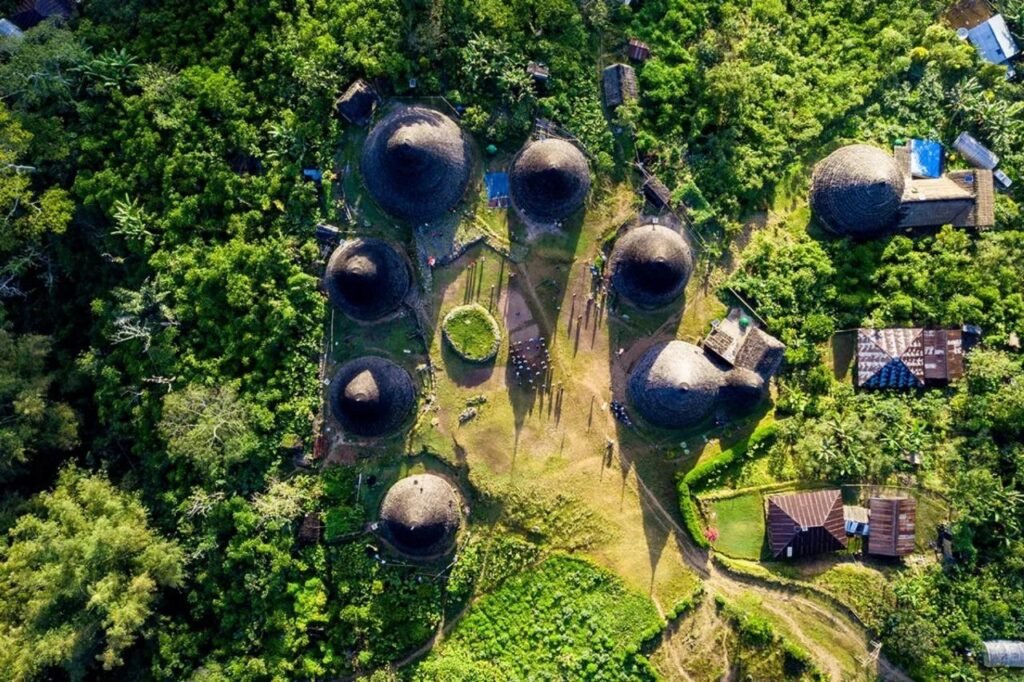
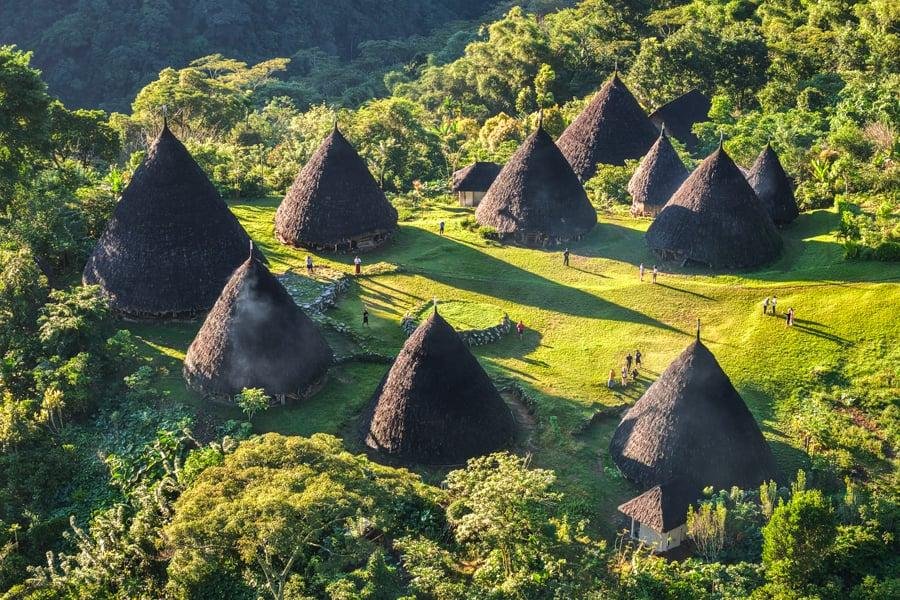
The most recognizable landmark of Wae Rebo is its collection of seven magnificent cone-shaped houses, known locally as Mbaru Niang.
Unlike ordinary houses, each Mbaru Niang is designed with remarkable architectural intelligence and deep spiritual symbolism. Built entirely from natural materials such as wood, bamboo, palm fiber, and rattan, the structures require no modern concrete or steel.
The cone-shaped design protects residents from heavy mountain rain, strong winds, and cold temperatures while maximizing airflow throughout the building.
Each house consists of five separate levels, each serving a different function.
1. Tenda
The ground floor functions as the main living area where families cook, eat, receive guests, and sleep together.
2. Lobo
The second level stores food supplies, daily necessities, and household equipment.
3. Lentar
This floor is reserved for storing seeds that will be planted during future farming seasons.
4. Lempa Rae
The fourth level is used for long-term food storage and important agricultural reserves.
5. Hekang Kode
The highest and most sacred level is dedicated to ancestral heirlooms and ceremonial objects. This area represents the spiritual connection between the villagers and their ancestors.
Today, several families may still live together inside a single Mbaru Niang, maintaining a communal lifestyle that has existed for centuries.
The Sacred Waelu Welcoming Ceremony
One experience that makes Wae Rebo different from almost every other tourist destination is the Waelu welcoming ceremony. Upon arriving in the village, visitors are not allowed to immediately explore or take photographs. Instead, everyone gathers inside the main house to participate in a traditional ceremony led by the village elder. During this ritual, prayers are offered to the ancestors asking permission to welcome guests safely into the village. Visitors are served locally grown Flores coffee while learning about the history of Wae Rebo and the customs they are expected to respect throughout their stay.
Only after this ceremony is completed are visitors considered official guests of the village. This tradition reflects one of the most important values of Manggarai culture: respect for ancestors and harmony between humans, nature, and the spiritual world.
Things Most Tourists Don't Know Before Visiting Wae Rebo
- History of Wae Rebo
- Mbaru Niang Houses
- UNESCO Wae Rebo
- Waelu Ceremony
- Overnight in Wae Rebo
- Things to Know Before Visiting Wae Rebo
- Trekking to Wae Rebo
- Wae Rebo Travel Tips
- Wae Rebo Coffee
- Wae Rebo Culture
Many travel blogs only show beautiful photographs of Wae Rebo, but there are several important realities every visitor should know before making the journey.
There Is Almost No Mobile Signal
Once you begin hiking toward Wae Rebo, mobile reception becomes extremely limited or disappears entirely.
This means visitors should inform family members before starting the trek and download offline maps if necessary.
Electricity Is Limited
Electricity is available only for several hours during the evening.
Power outlets are limited, making power banks highly recommended for cameras, phones, and drones.
There Are No Hotels
Accommodation is entirely traditional.
Guests sleep inside the communal Mbaru Niang houses on comfortable mattresses provided by the villagers.
This is an essential part of experiencing authentic village life.
Nights Can Be Surprisingly Cold
Although Flores has a tropical climate, temperatures in Wae Rebo may fall to around 10–15°C during the dry season.
Warm jackets, long pants, and socks are strongly recommended.
The Trek Is More Challenging Than Many Expect
Although often described as a short hike, the trail includes continuous uphill sections, stone paths, forest terrain, and steep inclines.
A reasonable level of fitness will make the journey far more enjoyable.
Respect Local Traditions
Visitors should dress modestly, speak politely, avoid excessive noise, and always ask permission before photographing local residents.
Remember that Wae Rebo is first and foremost a living village not an open-air museum.
Explore Wae Rebo NTT with 17 Tour Agency
Experience the magic of Wae Rebo NTT with hassle-free logistics, private transport, and local guides. Whether you want to join a 2D1N Wae Rebo Trip from Labuan Bajo or combine your cultural trek with a Komodo Island Sailing Tour, 17 Tour Agency is dedicated to delivering an authentic and comfortable journey. Contact 17 Tour Agency today to book your trip to Wae Rebo NTT!

 English
  Español
 Bahasa Indonesia
 Français
 Deutsch